HT
 EN
 ES
 FR
 PT


Strength In Numbers:
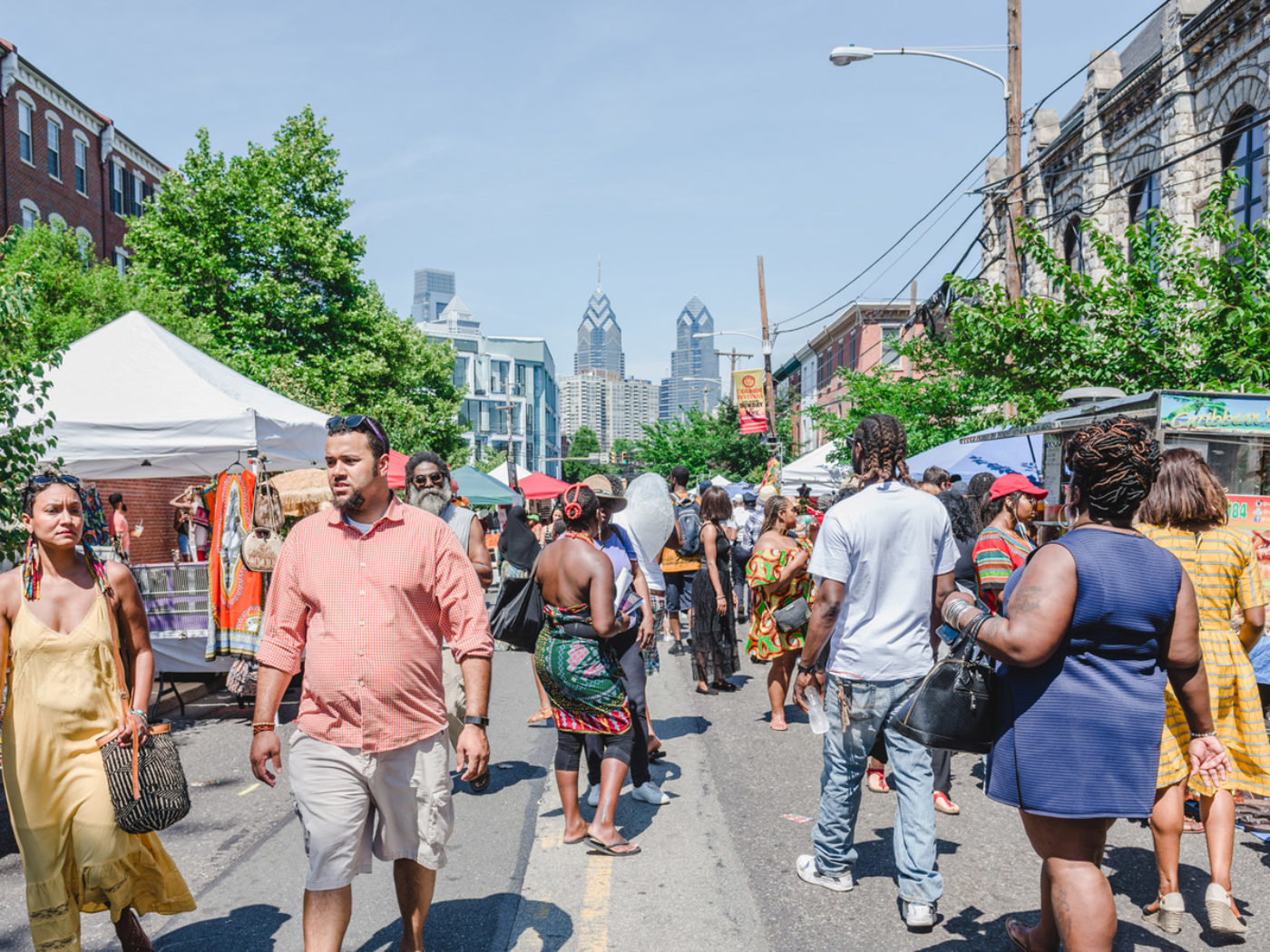
1. La 2010 U.S. Census reported 661,839—that’s 43.37%—of Philadelphians are African-American, the city’s second largest ethnic demographic. More recent estimates show this population has increased by approximately 1% in the past six years.
2. The largest concentration—82%—of African-American Philadelphians live in North Philadelphia west of Germantown Avenue, Point Breeze in South Philadelphia, West Philadelphia and in parts of Southwest Philadelphia.
3. Important African-American business corridors include 52nd Street between Walnut and
Arch Streets and Baltimore Avenue between 40tyè and 52nd Streets, both in West Philadelphia; and Stenton Avenue between Broad Street and Walnut Lane and Ogontz Avenue between Wyncote Avenue and Walnut Lane, both in West Oak Lane in North Philadelphia.
Exhibitions & Festivals:
4. Currently displayed at Philadelphia Museum of Art, Creative Africa includes five exhibitions that embrace art and design from the African continent. Pieces range from centuries-old bronze sculptures from the kingdom of Benin to contemporary fashion, photography and architecture. Two of the five exhibits close September 25, 2016 (others stay open through December 2016 and January 2017). Philadelphia Museum of Art’s Perelman Building, 2525 Benjamin Franklin Parkway, (215) 763-8100, philamuseum.org
5. Nari Ward: Sun Splashed offers a mid-career survey of the Jamaica-born artist, best known for his large-scale found-object assemblage work—a modern commentary on black history, the Caribbean diaspora, immigration and power. Of special pride to Philadelphians are Ward’s shoelace sculpture We the People epi Homeland Sweet Homeland, a sendup of Miranda Rights—both of which he created in collaboration with the Fabric Workshop and Museum in Philadelphia. Barnes Foundation, 2025 Benjamin Franklin Parkway, barnesfoundation.org
6. Nearly half a million people attend Odunde, a blockbuster festival of African, Caribbean and African-American culture, food and fun on South Street on the second Sunday in June. Thousands also come to Delaware River Waterfront each summer for the Roots Picnic, founded by Questlove of The Roots. Ebony magazine called Philly’s BlackStar Film Festival, held each August, “the black Sundance.” And the city is also the original location of Jay Z’s Made in America, a music festival taking place each year over Labor Day weekend. odundefestival.org, rootspicnic.com, blackstarfest.org, madeinamericafest.com
A Rich History:
7. Historic Philadelphia recognizes African-American life in the country’s earliest days through attractions, reenactments and signs. Pennsylvania Historical Markers honor both the Pennsylvania Abolition Society, the first American organization to work formally to end the practice of slavery, and the Act for the Gradual Abolition of Slavery, also the first of its kind in the states. Open-air site The President’s House: Freedom and Slavery in the Making of a New Nation reminds visitors that President George Washington practiced slavery at home, via stories of Hercules and Ona Judge, among others. The nearby Liberty Bell stood for the abolitionist movement in the 1830s and continues to represent freedom. historicphiladelphia.org; nps.gov/inde
8. Mother Bethel A.M.E., founding church of the African Methodist Episcopal (A.M.E.) denomination, celebrates its 200tyè anniversary this year. From July 3 through 13, the church hosts a bicentennial year celebration and the A.M.E. General Conference. The church building occupies the oldest parcel of U.S. land continuously owned by African-Americans and houses co-founder Richard Allen’s pulpit, tomb and museum. 419 S. 6tyè Street, (215) 925-0616, motherbethel.org
9. North Philadelphia’s 130-year-old George W. South Church of the Advocate has long promoted social justice. During the Civil Rights era, the church hosted the National Conference of Black Power (1968) and Black Panther Conference (1970). It was also the first Episcopal Church to ordain women (1974). 1801 W. Diamond Street, (215) 978-8000, churchoftheadvocate.org
10. In 1976, the Yon tèt twa twa became the first institution in a major U.S. city to preserve, interpret and exhibit the heritage and culture of African-Americans. The museum takes a fresh and bold look at the stories of African-Americans and their role in the founding of the nation through the core exhibit Audacious Freedom. Collections include that of photojournalist Jack T. Franklin, documenter of the Civil Rights movement both nationally and locally. 701 Arch Street, (215) 574-0380, aampmuseum.org
11. During the 2008 presidential campaign, then-Senator Barack Obama chose the National Constitution Center (NCC) as the site of his “A More Perfect Union” speech on race. The oratory on race delivered a message of unity and patriotism and is widely regarded as a turning point in the presidential primary season. The NCC is currently hosting the interactive exhibit Headed to the White House, through November 8, 2016. 525 Arch Street, (215) 409-6600, constitutioncenter.org
Living Legacies:
12. Philadelphia’s rich musical legacy is African-American musical history. The city was the proud home of contralto Marian Anderson, the trailblazing opera singer who wowed at Carnegie Hall, the White House and the Lincoln Memorial from 1925-1965. Her memorabilia-packed row house sits a few blocks south of Rittenhouse Square. Nearby, South Broad Street’s Tindley Temple is widely considered the birthplace of gospel. In the 1970s, partners Leon Huff epi Kenny Gamble perfected “Philadelphia soul” via gold singles and albums they produced for Philadelphia International Records. Patti LaBelle proudly calls Philly her hometown, as do Boyz II Men, Will Smith, Schoolly D, Jill Scott, The Roots, Meek Mill, Chill Moody epi Jazmine Sullivan.
13. Among the city’s innovation- and tech-minded black entrepreneurs are Christopher Gray, founder and CEO of the Scholly app; Project Runway winner and fashion designer Dom Streater; Amalgam Comics & Coffeehouse’s Ariell R. Johnson, the first African-American woman owner of an East Coast comics store; Wil Reynolds, founder and director of digital strategy at Seer Interactive; Shelton Mercer, cofounder of Audigent and TwitChange and partner at Benjamin’s Desk, and Keith Leaphart, owner of Replica Creative.
14. The city’s thriving food scene includes Top Chef Kevin Sbraga, owner of elegant Sbraga on South Broad Street and Southern eatery The Fat Ham in University City. There’s Low Country fare and live jazz at SOUTH on North Broad Street. Popular South Street spots include soul food venue Ms. Tootsie’s and Caribbean hangout Jamaican Jerk Hut. In West Philly, foodies find amazing Caribbean fare at the 48tyè Street Grille and great Ethiopian specialties at Abyssinia, Kaffa Crossing epi Dahlak. For dessert, don’t skip the pound cake at Denise’s Delicacies in Swampoodle.
15. Philadelphia’s African-American art scene, whose heritage includes Henry Ossawa Tanner epi Horace Pippin, thrives still. Accomplished local artists include Barkley L. Hendricks, Moe Brooker, Barbara Chase-Riboud, Brian Bazemore, Betty Leacraft, Ernel Martinez, Keir Johnston epi Odili Donald Odita. Discover more black talent at Manayunk’s October Gallery, a quirky inhabited family artist compound, the Ellen Powell Tiberino Memorial Museum epi Dupree Studios, both in West Philadelphia, and throughout the city via the Mural Arts Program’s more than 3,800 works, including African-American-inspired standouts Letters of Influence: Henry O. Tanner, North College and Ridge Avenues; Staircases & Mountaintops, 21st Street and Cecil B. Moore Avenue; Tribute to Dox Thrash, 16tyè Street and Girard Avenue.
16. African-American city leaders include City Council President Darrell Clarke; City Council members Kenyatta Johnson, Janine Blackwell, Curtis Jones, Jr., Cindy Bass, Blondell Reynolds Brown epi Cherelle Parker; and Police Commissioner Richard Ross, Jr. The city has had three two-term African-American mayors: Wilson Goode (1984-1992), John Street (2000-2008) and Michael Nutter (2008-2016).
Destination Resources For Media:
• visitphilly.com/pressroom: Press releases about Philadelphia events and happenings, visitor stats, story ideas, high-resolution photos, vantage points and media contacts
• visitphilly.isebox.net: High-definition b-roll library organized by topic
• twitter.com/visitphillypr: Just-for-media account focused on Philadelphia tourism news
Convention Resource For Media:
• phldnc.com: For all official Democratic National Convention coverage and information
Vizite Filadelfi® Se non nou ak misyon nou. Kòm ajans ofisyèl maketing touris rejyon an, nou bati imaj Greater Philadelphia, nou ankouraje vizit epi nou ranfòse ekonomi an.
Sou sit entènèt ofisyèl ak blòg Greater Philadelphia pou vizitè yo, visitphilly.com epi ou swete nou.com, vizitè yo ka eksplore bagay pou fè, evènman k ap vini, itinerè tèm ak pake otèl. Foto ak videyo atiran, kat entèaktif ak enfòmasyon detaye pou vizitè fè sit sa yo tounen zouti efikas pou planifye vwayaj. Ansanm ak chanèl medya sosyal Visit Philly, platfòm sou entènèt yo kominike dirèkteman ak konsomatè yo. Vwayajè yo ka rele tou epi pase nan Sant Vizitè Independence la pou jwenn plis enfòmasyon ak tikè.