EN
EN  ES
ES  FR
FR  PT
PT  ES_EC
ES_EC  FR_FR
FR_FR  NL
NL 



Beneath the surface of the eminently historic, emergently hip, eternally proud Philadelphia region is a trove of fantastic weirdness. Visitors can satisfy cravings for quirky, nerdy, creepy and otherwise out-there interests via the country’s largest pizza memorabilia collection (Pizza Brain); oldest hospital, replete with surgical amphitheater (Pennsylvania Hospital) and only brick-and-mortar homage to the Philadelphia Mummers (Mummers Museum), to name a few. Here’s a look at some of the all-American city’s wonderfully odd attractions—336 years in the making.
The Human Body:
- Drexel University College of Medicine – Human nervous system dissection.
Near the bookstore entrance on Drexel’s Queen Lane (East Falls) campus, what appears to be string art in the shape of a person is actually a dissected nervous system. Harriet Cole, an African-American woman who reportedly worked at the college, left her body to science in 1888. The medical school’s foremost anatomy professor at the time spent five months dissecting and reconstructing Cole. Nearby, millions of resource materials document the history of women in medicine and homeopathy at the college’s Legacy Center, open Monday-Friday from 9 a.m.- 4 p.m.; appointment requested. 2900 W. Queen Lane, (215) 991-8340, drexel.edu/medicine - Dr. and Mrs. Edwin Weaver III Historical Dental Museum – Terrifying dentists’ tools.
It’s worth letting one’s mouth go agape at the antique (and slightly horrifying) drills, chairs, X-ray machines, photographs, pearl-handled tools and recreated Victorian office at this small yet powerful museum, a repository of more than 150 years of dentistry in America. 3223 N. Broad Street, (215) 707-2799, temple.edu/dentistry - Mütter Museum of The College of Physicians of Philadelphia – H Famed anatomical specimens.
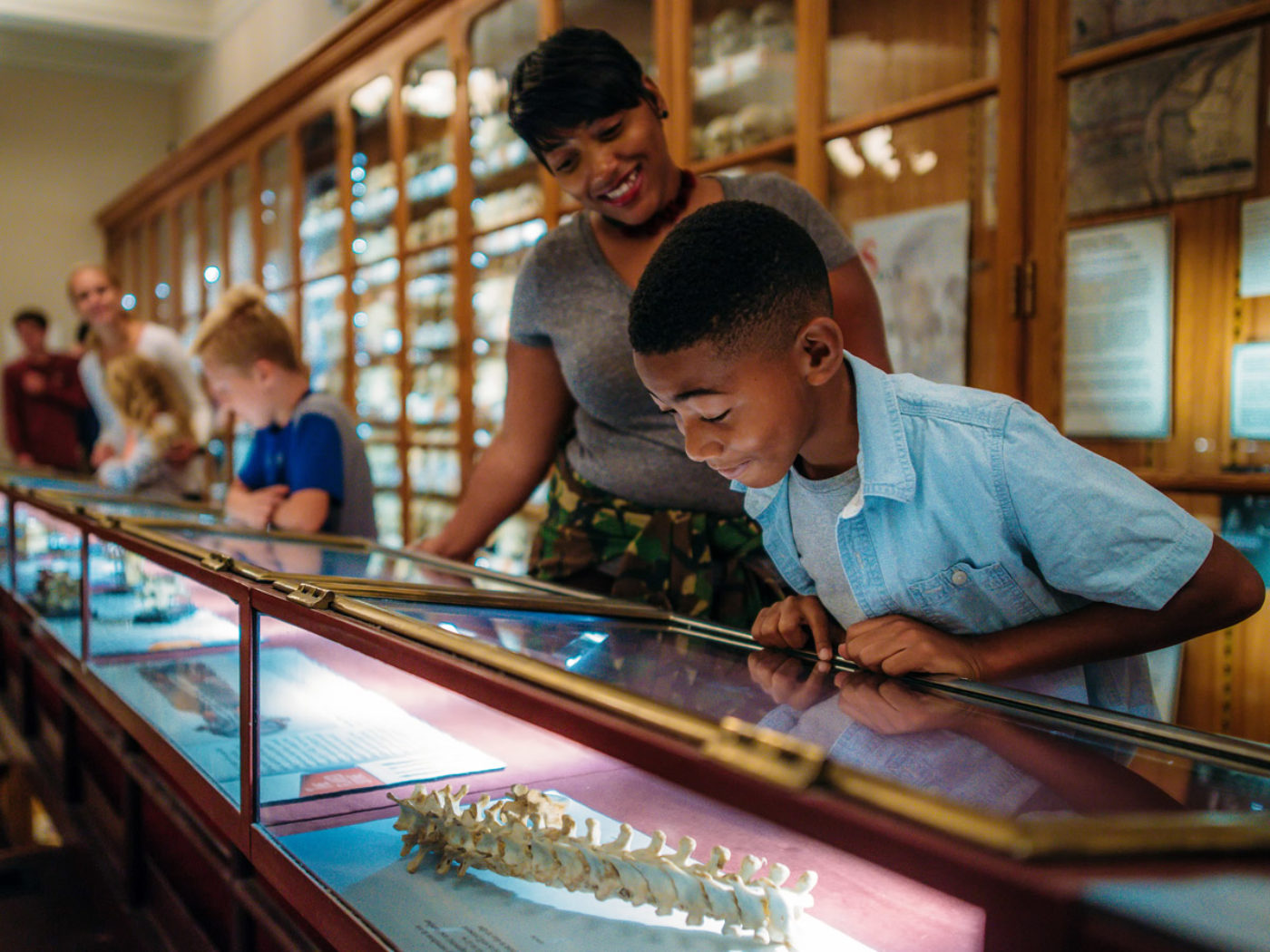
The Mütter displays thousands of items spanning the medical realm, from deformed and diseased body parts to the death cast of “Siamese twins” Chang and Eng to pieces of Albert Einstein’s gloriously nerdy brain. Filled with some impossible-to-believe specimens, the collections are still used today to advance medical science. 19 S. 22nd Street, (215) 560-8564, muttermuseum.org - Pennsylvania Hospital – 19th-century amphitheater, seven-inch tumor.
As they peer into the operating amphitheater of the nation’s first chartered hospital, visitors learn early 19th-century surgeries were performed before an audience, with no electricity, no sterile technique and a choice of rum, opium or a “tap on the head with a mallet” for anesthesia. A seven-inch tumor removed during one such procedure by Dr. Philip Syng Physick is on view in the Historic Library. Guided tours are available by appointment Monday through Friday. 800 Spruce Street, (215) 829-5434, uphs.upenn.edu/paharc
Natural & Person-Made Wonders:
- Mercer Museum – Tool hoarder’s castle.
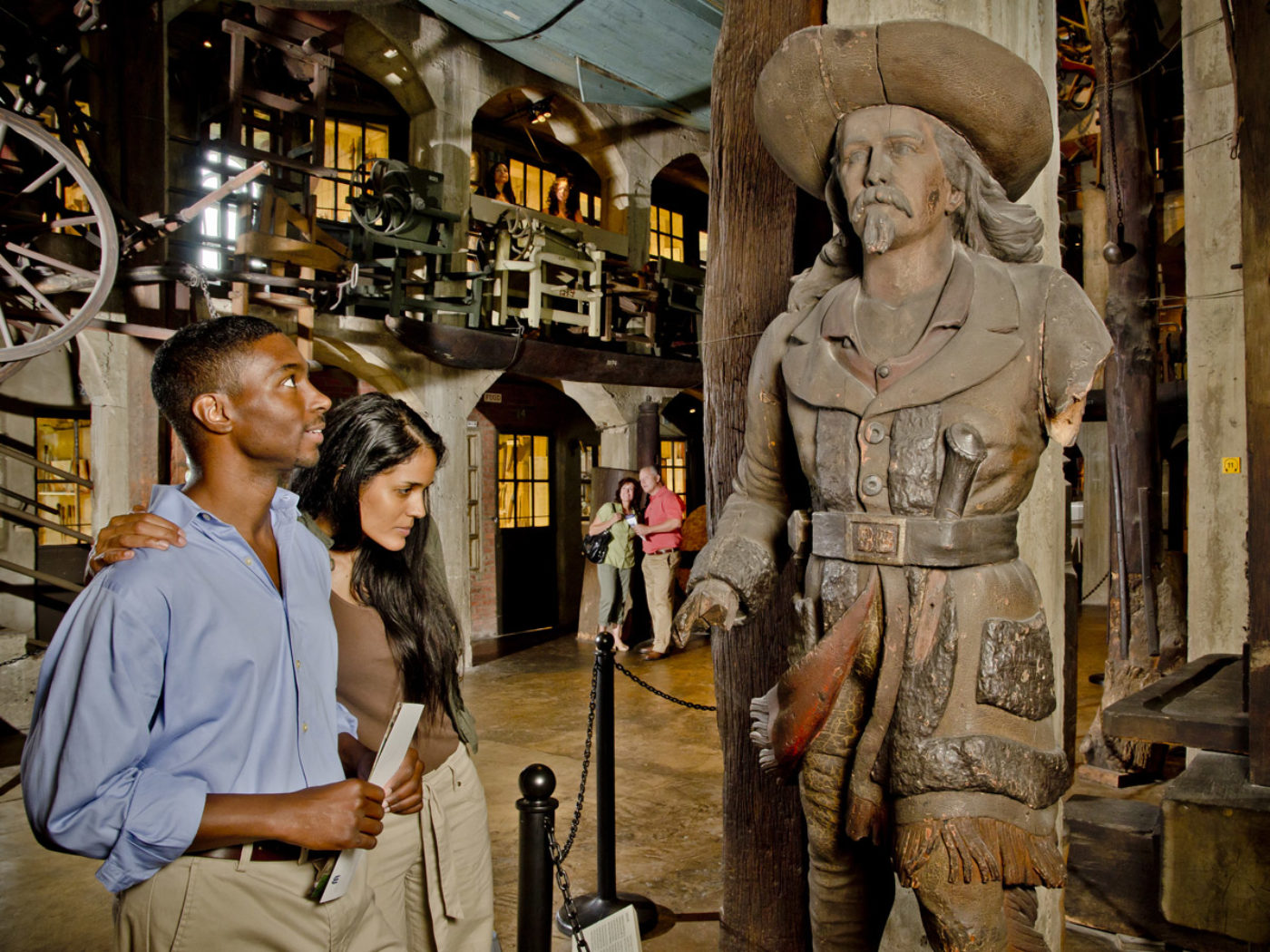
Stuffed inside every conceivable nook, cranny and crevice of the six-story concrete castle are 50,000 artifacts chronicling early-American working life. Collected and cataloged by 19th-century archaeologist and tile maker Henry Mercer, finds include a whaleboat, a stagecoach and a Conestoga Wagon—some of which hang from the ceiling. 84 S. Pine Street, Doylestown, (215) 345-0210, mercermuseum.org - Philadelphia’s Magic Gardens – Street-side mosaic marvel.
“Magic” (and arresting) aptly describe this 3,000-square-foot art environment spanning half a city block. Philadelphia folk artist Isaiah Zagar covered the site with a mosaic labyrinth of mirror, tile and reclaimed materials. 1020 South Street, (215) 733-0390, philadelphiasmagicgardens.org - Ringing Rocks Park – Sonorous rocks.
Upper Bucks County is one of the few places in the world where rocks struck with objects produce different musical tones, or “pings.” Though there are names for this type of rock—“sonorous” or “lithophonic”—geologists have yet to fully explain the reason for their musical aptitude. Ringing Rocks Road, Upper Black Eddy, (215) 348-6114, (215) 348-6114, visitbuckscounty.com - Wharton Esherick Museum – Crafty wooden houses.
Pennsylvania barns, German expressionist design and nature’s free-flowing curves inspired this architecturally fascinating National Historic Landmark. The onetime home and studio of Wharton Esherick, known as “the dean of American craftsmen” shows off curved walls, rooftops, staircases and sinewy hand-carved furniture and sculptures. Visitors experience the museum through by-reservation guided tours. 1520 Horseshoe Trail, Malvern, (610) 644-5822, whartonesherickmuseum.org - Whispering Benches – Alfresco voice transmitter.
Two people sitting on far ends of the Smith Memorial Arch’s 50-foot stone bench can whisper and hear each other clearly. The memorial commemorates Pennsylvania’s Civil War heroes, even though most people use it to whisper sweet nothings. Avenue of the Republic near Please Touch Museum®, West Fairmount Park, associationforpublicart.org
Oddball Collections:
- American Treasure Tour – Old shoes, old music makers, lots of clowns.
Next to Valley Forge National Historical Park, 100,000 square feet and two floors of 20th-century Americana fills an old B.F. Goodrich tire factory—the ultimate collector’s collection. The Music Room displays one of the world’s largest collections of mechanical music, including 150 nickelodeons, band organs and music boxes. A tram takes visitors on a tour of the Toy Box, which includes miniatures, a giant Sony Walkman, animated displays, a giant popsicle stick castle, the Warwick Hotel’s old chandelier, lots of clowns, endless Christmas decorations, dollhouses and trinkets galore. This one must be seen to be believed. Open Thursday-Sunday. One American Treasure Way, 422 Business Complex, Oaks, (866) 970-8687, americantreasuretour.com - Mummers Museum – Parade showplace.
An art deco-inspired building is the official repository for all historical items related to Philadelphia’s New Year’s Day parade. Here, on a stretch of 2nd Street referred to by residents as “Two Street,” visitors discover the roots of the elaborate, colorful and always memorable Mummers Parade and performance competitions. 1100 S. 2nd Street, (215) 336-3050, mummersmuseum.com - Pizza Brain – World’s largest collection of pizza stuff.
The world’s first pizza culture museum contains the world’s largest collection of pizza-related items, with more than 550 artifacts in rotation, earning it a coveted Guinness World Record. The curated, chronological collection includes a Starship Enterprise pizza cutter, historical advertisements, LPs, Teenage Mutant Ninja Turtles action figures and a working pizzeria. 2313 Frankford Avenue, (215) 291-2965, pizzabrain.org - The Stoogeum – Moe, Larry and Curly memorabilia.
Three Stooges fans relive the hilarity at the headquarters of the 2,000-member fan club and the world’s first center devoted to the lovable characters. The Stoogeum is open every Thursday and other weekdays by appointment for visitors who wish to peruse nearly 100,000 pieces of memorabilia dating back to 1918. 904 Sheble Lane, Ambler, (267) 468-0810, stoogeum.com
Weird Science:
- The Academy of Natural Sciences of Drexel University – Dino fossils, 18 million specimens.
One reason biologists at The Academy of Natural Sciences have risen to the forefront of ecological and biodiversity research: the venue’s collection of 18 million plant and animal specimens. On display: historic animal dioramas, live walking stick insects, Dinosaur Hall and a tropical live butterfly exhibit. 1900 Benjamin Franklin Parkway, (215) 299-1000, ansp.org - The Franklin Institute – Organs, galaxies, electricity and more.
A human-powered light bulb, a hair-raising static activity and Ben Franklin’s Lightning Rod; the Space Command exhibition and the Fels Planetarium; a walk-through heart; and crawl-through brain cells are just some of the science-y reasons this museum is the busiest one in the tri-state area. 222 N. 20th Street, (215) 448-1200, fi.edu - Philadelphia Insectarium and Butterfly Pavilion – Bugs and butterflies galore.
The most diverse arthropod zoo on the East Coast proves there’s nothing people won’t collect. Those who prefer flying creatures to crawling ones can step into the 7,000-square-foot tropical pavilion, home to thousands of fluttering butterflies representing 60 species. 8046 Frankford Avenue, (215) 335-9500, phillybutterflypavilion.com - Science History Institute – Vintage arsenic, microscope sets, world-changing discoveries.
How are plastics made? How are crayons colored? How can scientists measure oxygen on Mars? This free Old City spot reveals the weird, wonderful world of matter and materials. 315 Chestnut Street, (215) 925-2222, sciencehistory.org - Wagner Free Institute of Science – Natural Victoriana.
This opened-in-1865 National Historical Landmark is an intact, Victorian-era science museum. The 100,000 specimens include mounted birds and mammals, insects, fossils, skeletons, rocks, one of the oldest mineral collections in the country and the earliest discovered (1886) American saber-toothed tiger skull. 1700 W. Montgomery Avenue, (215) 763-6529, wagnerfreeinstitute.org
VISIT PHILADELPHIA® is our name and our mission. As the region’s official tourism marketing agency, we build Greater Philadelphia’s image, drive visitation and boost the economy.
On Greater Philadelphia’s official visitor website and blog, visitphilly.com and uwishunu.com, visitors can explore things to do, upcoming events, themed itineraries and hotel packages. Compelling photography and videos, interactive maps and detailed visitor information make the sites effective trip-planning tools. Along with Visit Philly social media channels, the online platforms communicate directly with consumers. Travelers can also call and stop into the Independence Visitor Center for additional information and tickets.